Buy immobilieninvestors.eu ?
We are moving the project
immobilieninvestors.eu .
Are you interested in purchasing the domain
immobilieninvestors.eu ?
domain@kv-gmbh.de · 0541-91531010
Buy immobilieninvestors.eu ?
What is the difference between stimulus discrimination and stimulus generalization?
Stimulus discrimination refers to the ability to differentiate between similar stimuli and respond differently to each one. This means that an individual can identify specific differences between stimuli and respond accordingly. On the other hand, stimulus generalization occurs when a response that was originally elicited by a specific stimulus is also produced in the presence of a similar, but not identical, stimulus. In this case, the individual is unable to distinguish between the original stimulus and the similar one, leading to a generalized response. **
Is tasting a stimulus?
Tasting is not considered a stimulus itself, but rather a sensory experience that occurs in response to a stimulus. The stimulus for tasting is the food or drink that comes into contact with taste receptors on the tongue, which then send signals to the brain to interpret the taste. Therefore, tasting is the result of a stimulus, rather than being the stimulus itself. **

Similar search terms for Stimulus
Top-Angebote
Products related to Stimulus:
-
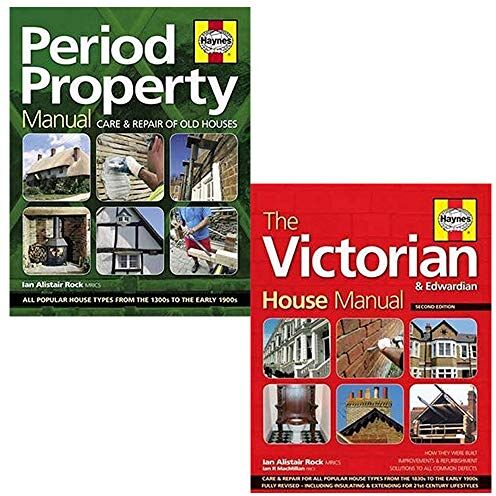
J H Haynes & Co Ltd Haynes Property Manual 2 Books Collection Set (The Victorian House, Period Property)The Victorian House Manual The Victorian House Manual (2nd Edition): How They Were Built, Improvements & Refurbishment, Solutions to All Common Defects Thinking of buying a Victorian or Edwardian house? Or maybe you already own one? Either way, this clearly written manual explains all you need to know about the care and repair of these classic properties. Today, many houses of this age are in need of extensive updating and maintenance, having suffered years of neglect. Some have been damaged by misguided home improvements or botched repairs using the wrong materials. Even newly refurbished properties can sometimes conceal dangerous structural alterations and shoddy build-quality. This unique manual provides detailed, expert advice, backed up with clear how to colour photographs, describing where to check for the critical danger signs and how to fix all common defects. Period Property Britain has a wonderfully rich stock of period houses - everything from medieval cottages to Georgian townhouses and Edwardian mansions. But many of these historic properties are now at risk. Some are unwittingly damaged by well-meaning owners or incompetent builders; others suffer long-term deterioration where mortgage lenders have imposed quick-fix 'remedies'. Despite being some of the most sustainable buildings on the planet, many old houses are now being subjected to ill-advised works to upgrade thermal efficiency, resulting in the destruction of the very qualities that make them so appealing, slashing their values. Haynes have come to the rescue with this clearly written, lavishly illustrated manual explaining the correct approach to care and repair - covering the full range of traditional materials. Every old house has a story to tell, so Haynes also show how to explore your home's history and strip back modern finishes to reveal long lost original features. This comprehensive manual is essential reading whether you want to get your hands dirty or just want to understand how old houses work and how to go about employing specialist craftsmen.19,99 £*Shipping: 2,99 £Secure redirect to the provider
-
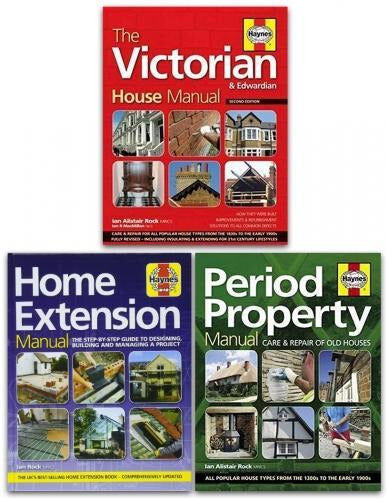
J H Haynes & Co Ltd Haynes Property Manual 3 Books Collection Set Home Extension The Victorian House Period PropertyTitles In this Set: The Victorian House Manual Home Extension Period Property The Victorian House Manual The Victorian House Manual (2nd Edition): How They Were Built, Improvements & Refurbishment, Solutions to All Common Defects Thinking of buying a Victorian or Edwardian house? Or maybe you already own one? Either way, this clearly written manual explains all you need to know about the care and repair of these classic properties. Today, many houses of this age are in need of extensive updating and maintenance, having suffered years of neglect. Some have been damaged by misguided home improvements or botched repairs using the wrong materials. Even newly refurbished properties can sometimes conceal dangerous structural alterations and shoddy build-quality. This unique manual provides detailed, expert advice, backed up with clear how to colour photographs, describing where to check for the critical danger signs and how to fix all common defects. Home ExtensionMany people are looking at ways to extend their homes rather than move house, but `getting the builders in' can be a recipe for disaster unless you really know what you are doing. Whether you plan to employ a building contractor or tackle some of the works yourself, this best-selling manual will show you how to stay firmly in control, resulting in a high-quality extension, completed on time and within budget. This new edition will include all the up-do-date information on complying with the latest Building Regs and Planning requirements, CAD design, energy-efficiency, under floor heating, bi-folds, liquid screeds, woodburning stoves and renewable energy. Period Property Britain has a wonderfully rich stock of period houses - everything from medieval cottages to Georgian townhouses and Edwardian mansions. But many of these historic properties are now at risk. Some are unwittingly damaged by well-meaning owners or incompetent builders; others suffer long-term deterioration where mortgage lenders have imposed quick-fix 'remedies'. Despite being some of the most sustainable buildings on the planet, many old houses are now being subjected to ill-advised works to upgrade thermal efficiency, resulting in the destruction of the very qualities that make them so appealing, slashing their values. Haynes have come to the rescue with this clearly written, lavishly illustrated manual explaining the correct approach to care and repair - covering the full range of traditional materials. Every old house has a story to tell, so Haynes also show how to explore your home's history and strip back modern finishes to reveal long lost original features. This comprehensive manual is essential reading whether you want to get your hands dirty or just want to understand how old houses work and how to go about employing specialist craftsmen.24,99 £*Shipping: 2,99 £Secure redirect to the provider
-
Portfolio Penguin Hooked: How to Build Habit-Forming Products by Nir EyalNir Eyal reveals how successful companies create products people can't put down - and how you can tooWhy do some products capture our attention while others flop? What makes us engage with certain things out of sheer habit? Is there an underlying pattern to how technologies hook us?Nir Eyal answers these questions (and many more) with the Hook Model - a four-step process that, when embedded into products, subtly encourages customer behaviour. Through consecutive "hook cycles," these products bring people back again and again without depending on costly advertising or aggressive messaging.Hooked is based on Eyal's years of research, consulting, and practical experience. He wrote the book he wished had been available to him as a start-up founder - not abstract theory, but a how-to guide for building better products. Hooked is written for product managers, designers, marketers, start-up founders, and anyone who seeks to understand how products influence our behaviour.Eyal provides readers with practical insights to create user habits that stick; actionable steps for building products people love; and riveting examples from the iPhone to Twitter, Pinterest and the Bible App.7,98 £*Shipping: 2,99 £Secure redirect to the provider
-
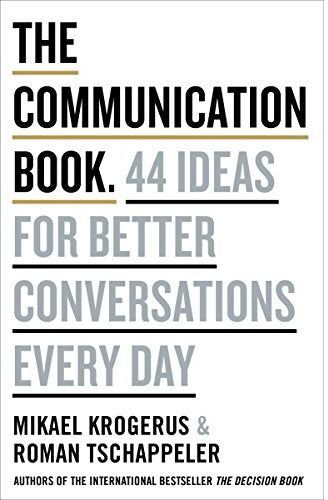
Portfolio Penguin The Communication Book: 44 Ideas for Better Conversations Every DayLEARN THE TECHNIQUES YOU NEED TO COMMUNICATE BETTER AT WORK AND HOME 'Communication is a bit like love - it's what makes the world go round, but nobody really knows how it works.' Struggle to find the words in meetings? Know what you mean but not how to say it? From Aristotle's thoughts on presenting to the Harvard Negotiation Project, internationally bestselling duo Mikael Krogerus and Roman Tschäppeler have 44 tried and tested ideas to change that. Distilled into a single volume, their winning marriage of practicality and humour turns seemingly difficult ideas into clear and entertaining diagrams that will help you: -Brush up on your listening skills and small talk -Run better meetings -Improve the conversations in your head Whether you're a CEO, just starting out or want to improve your relationships at home, this guide will improve your communication skills and help you form more meaningful connections.6,99 £*Shipping: 2,99 £Secure redirect to the provider

-
What is a stimulus?
A stimulus is any event or situation that evokes a response from an organism. It can be a physical object, sound, smell, taste, or any other form of input that triggers a reaction. In psychology, a stimulus is used to study how organisms perceive and respond to their environment. It plays a crucial role in understanding behavior and learning processes. **
-
What is an inadequate stimulus?
An inadequate stimulus is a stimulus that is not strong enough to evoke a response from a particular receptor or system. This means that the stimulus does not have the necessary intensity or specificity to trigger a reaction. In the context of sensory systems, an inadequate stimulus may not be able to activate the relevant sensory receptors or nerve pathways to generate a response. This concept is important in understanding how different stimuli can elicit different responses in biological systems. **
-
What is an adequate stimulus?
An adequate stimulus is the specific form of energy or signal that a sensory receptor is designed to detect and respond to. It is the type of input that a sensory receptor is most sensitive to and will produce the strongest response from. For example, the adequate stimulus for the visual system is light, for the auditory system is sound waves, and for the olfactory system is specific chemical molecules. The concept of adequate stimulus helps to explain how different sensory systems are specialized to detect and process specific types of information from the environment. **
-
What are economic stimulus measures?
Economic stimulus measures are policies implemented by governments to boost economic activity during times of recession or slow growth. These measures can include tax cuts, increased government spending on infrastructure projects, and monetary policies such as lowering interest rates. The goal of these measures is to stimulate consumer spending, business investment, and overall economic growth. By injecting money into the economy, these measures aim to create jobs, increase demand for goods and services, and ultimately improve the overall economic outlook. **

What is a non-adequate stimulus?
A non-adequate stimulus is a stimulus that does not elicit a response from a particular sensory receptor or system. In other words, it is a stimulus that does not match the specific type of input that a sensory receptor is designed to detect and respond to. For example, shining a light on the skin would not elicit a response from a taste receptor, making light a non-adequate stimulus for taste perception. **
How are different stimulus intensities transmitted?
Different stimulus intensities are transmitted through a process called sensory transduction. When a stimulus is detected by sensory receptors, such as photoreceptors in the eyes or mechanoreceptors in the skin, it triggers a response that is proportional to the intensity of the stimulus. This response can be in the form of increased frequency of action potentials in sensory neurons or the recruitment of more sensory receptors to respond to higher intensities. The sensory neurons then transmit this information to the brain, where the intensity of the stimulus is encoded and processed. **
Top-Angebote
Products related to Stimulus:
-
Uplifted Finds Multi Stimulus Feather Wand Collection Multi Stimulus Feather Wand CollectionMaximize your pets agility with the MultiStimulus Interaction Kit, an 11piece engagement system engineered with variableflight logic. This professionalgrade set features a telescopic wand architecture paired with multiple interchangeable...38,97 $*Shipping: 0,00 $Secure redirect to the provider
-
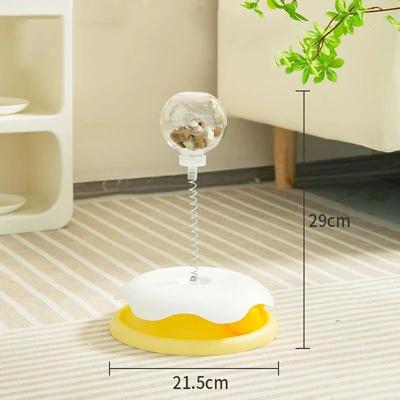
Uplifted Finds Kinetic Slow Food Multi Stimulus Station yellowElevate your pets physical and mental engagement with the KineticSlow Food Station, a highperformance enrichment tool engineered with dualmode stimulation logic. This hybrid system combines a gravitationalflow treat dispenser with an orbital...55,97 $*Shipping: 0,00 $Secure redirect to the provider
-
J H Haynes & Co Ltd Haynes Property Manual 2 Books Collection Set (The Victorian House, Period Property)The Victorian House Manual The Victorian House Manual (2nd Edition): How They Were Built, Improvements & Refurbishment, Solutions to All Common Defects Thinking of buying a Victorian or Edwardian house? Or maybe you already own one? Either way, this clearly written manual explains all you need to know about the care and repair of these classic properties. Today, many houses of this age are in need of extensive updating and maintenance, having suffered years of neglect. Some have been damaged by misguided home improvements or botched repairs using the wrong materials. Even newly refurbished properties can sometimes conceal dangerous structural alterations and shoddy build-quality. This unique manual provides detailed, expert advice, backed up with clear how to colour photographs, describing where to check for the critical danger signs and how to fix all common defects. Period Property Britain has a wonderfully rich stock of period houses - everything from medieval cottages to Georgian townhouses and Edwardian mansions. But many of these historic properties are now at risk. Some are unwittingly damaged by well-meaning owners or incompetent builders; others suffer long-term deterioration where mortgage lenders have imposed quick-fix 'remedies'. Despite being some of the most sustainable buildings on the planet, many old houses are now being subjected to ill-advised works to upgrade thermal efficiency, resulting in the destruction of the very qualities that make them so appealing, slashing their values. Haynes have come to the rescue with this clearly written, lavishly illustrated manual explaining the correct approach to care and repair - covering the full range of traditional materials. Every old house has a story to tell, so Haynes also show how to explore your home's history and strip back modern finishes to reveal long lost original features. This comprehensive manual is essential reading whether you want to get your hands dirty or just want to understand how old houses work and how to go about employing specialist craftsmen.19,99 £*Shipping: 2,99 £Secure redirect to the provider
-
J H Haynes & Co Ltd Haynes Property Manual 3 Books Collection Set Home Extension The Victorian House Period PropertyTitles In this Set: The Victorian House Manual Home Extension Period Property The Victorian House Manual The Victorian House Manual (2nd Edition): How They Were Built, Improvements & Refurbishment, Solutions to All Common Defects Thinking of buying a Victorian or Edwardian house? Or maybe you already own one? Either way, this clearly written manual explains all you need to know about the care and repair of these classic properties. Today, many houses of this age are in need of extensive updating and maintenance, having suffered years of neglect. Some have been damaged by misguided home improvements or botched repairs using the wrong materials. Even newly refurbished properties can sometimes conceal dangerous structural alterations and shoddy build-quality. This unique manual provides detailed, expert advice, backed up with clear how to colour photographs, describing where to check for the critical danger signs and how to fix all common defects. Home ExtensionMany people are looking at ways to extend their homes rather than move house, but `getting the builders in' can be a recipe for disaster unless you really know what you are doing. Whether you plan to employ a building contractor or tackle some of the works yourself, this best-selling manual will show you how to stay firmly in control, resulting in a high-quality extension, completed on time and within budget. This new edition will include all the up-do-date information on complying with the latest Building Regs and Planning requirements, CAD design, energy-efficiency, under floor heating, bi-folds, liquid screeds, woodburning stoves and renewable energy. Period Property Britain has a wonderfully rich stock of period houses - everything from medieval cottages to Georgian townhouses and Edwardian mansions. But many of these historic properties are now at risk. Some are unwittingly damaged by well-meaning owners or incompetent builders; others suffer long-term deterioration where mortgage lenders have imposed quick-fix 'remedies'. Despite being some of the most sustainable buildings on the planet, many old houses are now being subjected to ill-advised works to upgrade thermal efficiency, resulting in the destruction of the very qualities that make them so appealing, slashing their values. Haynes have come to the rescue with this clearly written, lavishly illustrated manual explaining the correct approach to care and repair - covering the full range of traditional materials. Every old house has a story to tell, so Haynes also show how to explore your home's history and strip back modern finishes to reveal long lost original features. This comprehensive manual is essential reading whether you want to get your hands dirty or just want to understand how old houses work and how to go about employing specialist craftsmen.24,99 £*Shipping: 2,99 £Secure redirect to the provider
-
What is the difference between stimulus discrimination and stimulus generalization?
Stimulus discrimination refers to the ability to differentiate between similar stimuli and respond differently to each one. This means that an individual can identify specific differences between stimuli and respond accordingly. On the other hand, stimulus generalization occurs when a response that was originally elicited by a specific stimulus is also produced in the presence of a similar, but not identical, stimulus. In this case, the individual is unable to distinguish between the original stimulus and the similar one, leading to a generalized response. **
-
Is tasting a stimulus?
Tasting is not considered a stimulus itself, but rather a sensory experience that occurs in response to a stimulus. The stimulus for tasting is the food or drink that comes into contact with taste receptors on the tongue, which then send signals to the brain to interpret the taste. Therefore, tasting is the result of a stimulus, rather than being the stimulus itself. **
-
What is a stimulus?
A stimulus is any event or situation that evokes a response from an organism. It can be a physical object, sound, smell, taste, or any other form of input that triggers a reaction. In psychology, a stimulus is used to study how organisms perceive and respond to their environment. It plays a crucial role in understanding behavior and learning processes. **
-
What is an inadequate stimulus?
An inadequate stimulus is a stimulus that is not strong enough to evoke a response from a particular receptor or system. This means that the stimulus does not have the necessary intensity or specificity to trigger a reaction. In the context of sensory systems, an inadequate stimulus may not be able to activate the relevant sensory receptors or nerve pathways to generate a response. This concept is important in understanding how different stimuli can elicit different responses in biological systems. **
Similar search terms for Stimulus
-
Portfolio Penguin Hooked: How to Build Habit-Forming Products by Nir EyalNir Eyal reveals how successful companies create products people can't put down - and how you can tooWhy do some products capture our attention while others flop? What makes us engage with certain things out of sheer habit? Is there an underlying pattern to how technologies hook us?Nir Eyal answers these questions (and many more) with the Hook Model - a four-step process that, when embedded into products, subtly encourages customer behaviour. Through consecutive "hook cycles," these products bring people back again and again without depending on costly advertising or aggressive messaging.Hooked is based on Eyal's years of research, consulting, and practical experience. He wrote the book he wished had been available to him as a start-up founder - not abstract theory, but a how-to guide for building better products. Hooked is written for product managers, designers, marketers, start-up founders, and anyone who seeks to understand how products influence our behaviour.Eyal provides readers with practical insights to create user habits that stick; actionable steps for building products people love; and riveting examples from the iPhone to Twitter, Pinterest and the Bible App.7,98 £*Shipping: 2,99 £Secure redirect to the provider
-
Portfolio Penguin The Communication Book: 44 Ideas for Better Conversations Every DayLEARN THE TECHNIQUES YOU NEED TO COMMUNICATE BETTER AT WORK AND HOME 'Communication is a bit like love - it's what makes the world go round, but nobody really knows how it works.' Struggle to find the words in meetings? Know what you mean but not how to say it? From Aristotle's thoughts on presenting to the Harvard Negotiation Project, internationally bestselling duo Mikael Krogerus and Roman Tschäppeler have 44 tried and tested ideas to change that. Distilled into a single volume, their winning marriage of practicality and humour turns seemingly difficult ideas into clear and entertaining diagrams that will help you: -Brush up on your listening skills and small talk -Run better meetings -Improve the conversations in your head Whether you're a CEO, just starting out or want to improve your relationships at home, this guide will improve your communication skills and help you form more meaningful connections.6,99 £*Shipping: 2,99 £Secure redirect to the provider
-
"Stupell Merry Christmas Cardinals Outdoor Door Mat, design by Dogwood Portfolio, 18""x30"""Bring the timeless charm of natural fibers to your space with our woven imitation sisal mats — designed to offer the rich texture of sisal without sacrificing performance.40,66 $*Shipping: 0,00 $Secure redirect to the provider
-
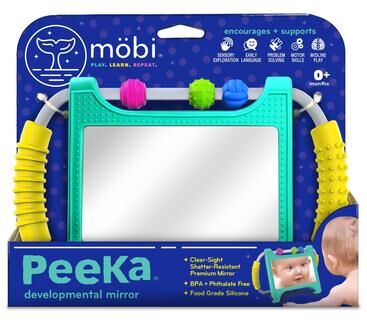
Mobi Peeka Development MirrorPEEKA® developmental mirror was designed by our team of doctors, therapists and parents to help children explore, learn and grow. When you place PEEKA® in the hands of your little ones, you will be amazed at the variety of ways they find to play...26,99 $*Shipping: 0,00 $Secure redirect to the provider
-
What is an adequate stimulus?
An adequate stimulus is the specific form of energy or signal that a sensory receptor is designed to detect and respond to. It is the type of input that a sensory receptor is most sensitive to and will produce the strongest response from. For example, the adequate stimulus for the visual system is light, for the auditory system is sound waves, and for the olfactory system is specific chemical molecules. The concept of adequate stimulus helps to explain how different sensory systems are specialized to detect and process specific types of information from the environment. **
-
What are economic stimulus measures?
Economic stimulus measures are policies implemented by governments to boost economic activity during times of recession or slow growth. These measures can include tax cuts, increased government spending on infrastructure projects, and monetary policies such as lowering interest rates. The goal of these measures is to stimulate consumer spending, business investment, and overall economic growth. By injecting money into the economy, these measures aim to create jobs, increase demand for goods and services, and ultimately improve the overall economic outlook. **
-
What is a non-adequate stimulus?
A non-adequate stimulus is a stimulus that does not elicit a response from a particular sensory receptor or system. In other words, it is a stimulus that does not match the specific type of input that a sensory receptor is designed to detect and respond to. For example, shining a light on the skin would not elicit a response from a taste receptor, making light a non-adequate stimulus for taste perception. **
-
How are different stimulus intensities transmitted?
Different stimulus intensities are transmitted through a process called sensory transduction. When a stimulus is detected by sensory receptors, such as photoreceptors in the eyes or mechanoreceptors in the skin, it triggers a response that is proportional to the intensity of the stimulus. This response can be in the form of increased frequency of action potentials in sensory neurons or the recruitment of more sensory receptors to respond to higher intensities. The sensory neurons then transmit this information to the brain, where the intensity of the stimulus is encoded and processed. **
* All prices are inclusive of VAT and, if applicable, plus shipping costs. The offer information is based on the details provided by the respective shop and is updated through automated processes. Real-time updates do not occur, so deviations can occur in individual cases. ** Note: Parts of this content were created by AI.